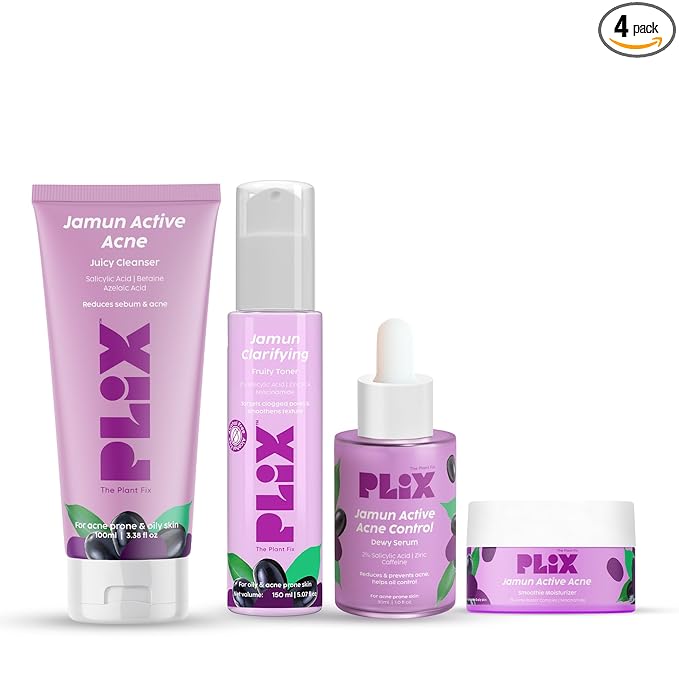
- Reduces Acne: Salicylic acid and anti-acne bacteria agents, proven to visibly reduce acne within weeks
Plix Jamun Active Acne Cleanser, 2% Salicylic Acid Serum
₹1,800.00 Original price was: ₹1,800.00.₹1,149.00Current price is: ₹1,149.00.
Category: plix acne kit
Description
Introduction: The Acne Paradox – A Universal Struggle Seeking a Sophisticated Solution
Acne vulgaris is more than a skin condition; it is a complex dermatological and psychological puzzle that affects millions globally, transcending age, gender, and ethnicity.
It represents a paradox: a universal human experience that often feels intensely personal and isolating.
The quest for clear skin has fueled a massive global industry, yet many are left navigating a maze of quick fixes, harsh treatments, and conflicting advice that can exacerbate the problem, leading to damaged skin barriers, increased sensitivity, and profound frustration.
In this landscape of often overly simplistic solutions, a more intelligent, gentle, and profoundly effective philosophy has emerged from the East: the world of Korean skin care.
Korean skin care is not merely a trend; it is a centuries-old cultural heritage reimagined for the modern world, built on a foundation of prevention, meticulous care, and deep hydration.
It approaches acne not as an enemy to be nuked into submission with aggressive, barrier-stripping actives, but as a symptom of imbalance to be corrected through a holistic, multi-faceted regimen.
This guide will deconstruct the provided anti-acne claims—reducing acne, soothing inflammation, controlling oil, and diminishing marks—through the sophisticated, results-oriented lens of Korean skin care.
We will explore how integrating this philosophy can transform a basic four-step routine into a powerful, life-changing ritual for lasting clarity and confidence.
2. Beyond the Surface: A Scientific Deconstruction of Acne Pathogenesis
To effectively treat acne, one must first understand its multifaceted origins. Acne is a disease of the pilosebaceous unit (the hair follicle and its attached oil gland). Its development is orchestrated by four key pathophysiological factors:
-
The Role of Sebum and Hormonal Triggers: Sebum, the skin’s natural oil, is vital for maintaining hydration and barrier function.
-
However, androgens (hormones that increase during puberty, menstrual cycles, and times of stress) can overstimulate the sebaceous glands, leading to hyperseborrhea—an overproduction of sebum.
-
This creates a rich, oily environment conducive to the next stages of acne formation.
-
Hyperkeratinization: The Pore-Clogging Cascade: The skin naturally sheds dead cells. In acne-prone skin, this process goes awry. A failure of normal keratinization leads to an excess of sticky, dead skin cells that are not shed properly.
-
Instead, they bind together and mix with the excess sebum, forming a microcomedone—the earliest, invisible precursor to all acne lesions. This plug traps everything inside the follicle, creating a closed environment.
-
C. Acnes Bacteria: The Inflammatory Instigator: Cutibacterium acnes (formerly Propionibacterium acnes) is a bacterium that naturally resides on everyone’s skin.
-
In a balanced, oxygenated environment, it’s harmless. But within the clogged, sebum-rich, anaerobic (oxygen-free) environment of a plugged follicle, it proliferates rapidly.
-
C. acnes feeds on the sebum, breaking down triglycerides into free fatty acids. This metabolic process not only irritates the follicular wall but also triggers a massive immune response.
-
The Inflammation Cycle: Redness, Swelling, and Post-Inflammatory Sequelae: The body recognizes the bacterial overgrowth and the irritation as a threat. It sends white blood cells to attack, leading to inflammation.
-
This manifests as the redness, swelling, heat, and pain characteristic of papules (red bumps) and pustules (whiteheads).
-
If the inflammation is severe enough, it can rupture the follicle wall, spreading the battle to the surrounding dermis and forming deeper, painful nodules and cysts.
-
Even after the active lesion heals, the inflammatory process can leave behind post-inflammatory erythema (red marks) and post-inflammatory hyperpigmentation (dark marks), as well as textural scars.
3. The Korean Skin Care Philosophy: A Foundational Shift from Treatment to Transformation
The Western approach to acne has historically been targeted and aggressive: identify the strongest active ingredient (like high-percentage benzoyl peroxide or salicylic acid) and apply it relentlessly to dry out and kill the acne.
This often leads to a compromised skin barrier, resulting in skin that is both acne-prone and sensitized—a frustrating combination. The Korean skin care philosophy offers a radical, more intelligent alternative.
-
The Pillars of Korean Skin Care: Prevention, Patience, and Layering: At its core, Korean skin care is proactive, not reactive. The goal is to create a healthy, resilient skin ecosystem that is inherently resistant to acne. This is achieved through:
-
Prevention: Consistent, gentle cleansing and hydration to prevent pores from becoming clogged in the first place.
-
Patience: Understanding that true skin transformation is a marathon, not a sprint. Results are cultivated over weeks and months of consistent care, not overnight.
-
Layering (Cheonyul): The methodical application of multiple, light layers of hydrating and treatment products. This ensures the skin is never stripped or starved of moisture, even while powerful actives are working.
-
A well-hydrated skin barrier is better able to handle treatment ingredients and heal itself efficiently. This principle is the absolute bedrock of effective Korean skin care.
-
-
Why Korean Skin Care is Revolutionizing Acne Management: Korean skin care succeeds where other regimens fail because it addresses all four pathogenic factors of acne without compromising the skin barrier.
-
It uses actives smartly and gently, always buffered by soothing and hydrating ingredients. It recognizes that dehydration can actually trigger more oil production, so it focuses on “oil control through hydration.”
-
This nuanced, holistic approach is the genius of Korean skin care.
-
The Ritual of Self-Care: Mental Wellness as a Cornerstone of Korean Skin Care: A Korean skin care routine is a mindful ritual.
-
The act of taking ten to twenty minutes twice a day to care for your skin is a form of active meditation. It reduces stress, which is a known acne trigger.
-
This focus on the mental and emotional aspects of skincare is a defining feature of Korean skin care, transforming a chore into a cherished act of self-love and respect.
4. Deconstructing the Power Ingredients: The Science Behind the Claims
The provided description highlights key benefits achieved through specific, scientifically-proven ingredients. Let’s explore how they work and how they are optimally utilized within a Korean skin care framework.
-
Salicylic Acid: The Keratolytic Powerhouse: This beta-hydroxy acid (BHA) is the gold standard for fighting comedonal acne.
-
Its lipid-soluble nature allows it to penetrate deep into the pore lining, dissolving the mixture of sebum and dead skin cells that form the plug. This process, known as desquamation, unclogs pores and prevents new microcomedones from forming.
-
In a Korean skin care routine, salicylic acid is often found in low concentrations (0.5%-2%) in cleansers, toners, and serums, ensuring efficacy without overwhelming sensitivity. It is the key agent behind “visibly reducing acne within weeks” and “reducing pore size.”
-
Anti-Acne Bacteria Agents: The Microbial Battlefield: This category encompasses a range of ingredients that target C. acnes bacteria.
-
Unlike harsh antibiotics, many modern agents work by creating an inhospitable environment or gently disrupting bacterial function. These can include:
-
Centella Asiatica (Cica): A superstar in Korean skin care, it has antibacterial and potent anti-inflammatory properties.
-
Tea Tree Oil: A natural antiseptic, often used in spot treatments.
-
Niacinamide (Vitamin B3): A multi-tasking marvel that reduces inflammation, regulates sebum production, and improves barrier function, indirectly creating a less favorable environment for bacteria.
-
Willow Bark Extract: A natural source of salicylic acid with additional anti-inflammatory benefits.
-
The Korean skin care approach favors these gentler, multi-functional antibacterial agents to prevent bacterial resistance and maintain skin balance.
-
-
Soothing Agents: Quelling the Flames of Inflammation: Calming inflammation is critical not only for reducing current acne but also for preventing marks and scars. Korean skin care is renowned for its arsenal of soothing ingredients:
-
Centella Asiatica: Again, a hero ingredient that promotes wound healing and soothes redness.
-
Madecassoside: A potent compound derived from Centella that is exceptionally effective at calming irritated skin.
-
Green Tea Extract: Packed with polyphenols (EGCG) that are powerful antioxidants and anti-inflammatories.
-
Beta-Glucan: A deeply hydrating ingredient that also soothes and reduces redness.
-
Snail Mucin: A quintessential Korean skin care ingredient that is rich in glycoproteins, hyaluronic acid, and antimicrobial peptides, promoting repair and calming inflammation.
-
These ingredients are the reason the regimen can “soothe skin inflammation, reducing swelling and redness.”
-
-
Sebostatic Compounds: The Art of Oil Control: True oil control is achieved not by stripping the skin, but by regulating sebum production and maintaining hydration. Key players include:
-
Niacinamide: Clinical studies show 2-5% Niacinamide is as effective as 1% clindamycin (an antibiotic) in reducing sebum production and improving acne. It’s a cornerstone of modern Korean skin care formulations.
-
Green Tea Extract: Helps to modulate sebum production.
-
Hyaluronic Acid: By providing intense, lightweight hydration, it signals to the skin that it does not need to overproduce oil to compensate for dryness.
-
This “oil control through hydration” is a fundamental tenet of Korean skin care philosophy and is key to “decreasing sebum secretion.”
-
5. The Ultimate Anti-Acne Regimen: A Four-Step Korean Skin Care Ritual for Clarity
The provided four-step routine is a perfect canvas upon which to build a sophisticated Korean skin care ritual. We will expand each step with the principles of Korean skin care.
Step 1: The Double Cleanse – The Korean Skin Care Non-Negotiable
The instruction to “cleanse your face” is the foundation. In Korean skin care, this is elevated to the Double Cleanse, a two-step process that is non-negotiable for acne-prone skin.
-
First Cleanse: Oil-Based Cleanser. This step might seem counterintuitive for oily skin, but it is essential. Oil dissolves oil.
-
A lightweight oil or balm cleanser effectively breaks down and dissolves sunscreen, makeup, excess sebum, and environmental pollutants without stripping the skin.
-
It gently loosens the debris trapped in pores. Massaging it onto dry skin also provides a gentle lymphatic massage. Emulsify with water and rinse.
-
Second Cleanse: Water-Based Cleanser. This step uses a gentle, low-pH foaming or gel cleanser, often containing a small amount of salicylic acid or tea tree oil.
-
It washes away any remaining impurities, leaving the skin perfectly clean, balanced, and prepared to receive subsequent products without any residue barrier.
-
This thorough yet gentle cleansing is the first and most critical step in any authentic Korean skin care routine.
Step 2: The Toner – Beyond Astringency to Hydration and pH Rebalancing
The instruction to “spritz toner onto face & neck” is just the beginning. The Western concept of an astringent, alcohol-based toner designed to “strip” oil is anathema to Korean skin care.
The Korean skin care toner (or “skin”) is a hydrating and pH-balancing essence. After cleansing, the skin’s pH is slightly elevated. A Korean skin care toner, often pH-balanced itself, helps to restore the skin’s optimal acidic mantle (pH around 5.5), which is crucial for a healthy microbiome and barrier function.
Furthermore, it delivers a first layer of hydration with ingredients like hyaluronic acid, snail mucin, or centella asiatica. This hydrating layer plumps the skin and prepares it to absorb the treatment serums that follow, maximizing their efficacy.
Applying it with hands patted gently into the skin or with a soft cotton pad is a key technique in Korean skin care.
*Step 3: The Serum – The Targeted Treatment Heart of Korean Skin Care
The directive to “apply 2-3 drops of serum” is where the targeted magic happens. This is the concentrated treatment step, the workhorse of the routine.
In a Korean skin care regimen for acne, one might use multiple serums, applied in order of texture from thinnest to thickest (a practice known as layering).
-
A Hydrating Serum: A formula with hyaluronic acid or beta-glucan to ensure the skin is deeply hydrated.
-
A Treatment Serum: This is where the salicylic acid, niacinamide, centella asiatica, and other anti-acne agents come into play. A niacinamide serum is a superb multi-tasking option for acne, addressing oil, inflammation, and marks simultaneously.
-
The gentle, effective formulations preferred in Korean skin care allow for daily use without irritation. The “2-3 drops” are warmed between the fingertips and gently pressed and patted into the skin, ensuring even absorption—a signature application method in Korean skin care.
Step 4: The Moisturizer – Sealing in Actives and Repairing the Barrier
The final step to “massage moisturiser onto your skin” is vital, even for oily and acne-prone skin. A common misconception is that oily skin doesn’t need moisture.
In reality, a lack of hydration can exacerbate oil production. The Korean skin care solution is a lightweight, oil-free, non-comedogenic moisturizer.
Its job is to seal in all the hydrating and treatment layers that came before it, preventing transepidermal water loss (TEWL).
It acts as a protective barrier, and many Korean skin care moisturizers for acne are fortified with ceramides, peptides, and soothing ingredients to actively repair the skin barrier, making it stronger and more resilient over time.
The massaging action boosts circulation and aids penetration, finishing the ritual on a calming note.
6. A Week-by-Week Journey: Visible Transformation and What to Expect
Adopting a consistent Korean skin care routine yields progressive results:
-
Weeks 1-2: The initial focus is on balance. The skin may feel cleaner and more hydrated immediately. The double cleanse effectively removes pore-clogging debris. Early inflammation might begin to subdue due to the soothing ingredients.
-
Weeks 3-4: This is where the actives truly begin their work. Salicylic acid unclogs pores, leading to a reduction in blackheads and small whiteheads. Niacinamide starts regulating oil production.
-
The skin should feel less oily and look more refined. The “visibly reduce acne within weeks” claim becomes apparent.
-
Weeks 5-8: With consistent use, the prevention aspect shines. Fewer new breakouts occur. Post-inflammatory red marks (erythema) begin to fade significantly thanks to the anti-inflammatory and barrier-repairing ingredients.
-
The complexion appears clearer, calmer, and more even-toned. The “soothes redness” and “helps reduce acne marks” results are clearly visible.
-
Ongoing: The ritual becomes maintenance. The skin barrier is stronger, more resilient, and better able to defend itself against internal and external acne triggers.
-
The goal of a clear, healthy, “glass skin” complexion—the hallmark of great Korean skin care—is within reach.
7. Beyond the Basics: Advanced Korean Skin Care Techniques for Stubborn Acne
-
The Art of Layering (Cheonyul): For stubborn acne, one can layer a hydrating toner (e.g., with hyaluronic acid) followed by a treatment toner (e.g., with AHA/PHA) and then a calming serum (e.g., with centella) and a niacinamide serum.
-
This targeted approach addresses multiple concerns simultaneously without overloading the skin with a single, potent product.
-
Acne Patch Technology: Overnight Spot Transformation: Hydrocolloid acne patches are a genius innovation from Korean skin care.
-
Placed on a whitehead or a picked spot, they create a moist healing environment, absorb excess fluid and pus, protect from bacteria and picking, and reduce inflammation and size overnight.
-
They are a perfect example of the targeted, effective, and gentle Korean skin care approach.
-
The Role of Sheet Masks in a Korean Skin Care Acne Routine: Sheet masks soaked in soothing ingredients like centella, tea tree, or aloe provide an intensive 15-20 minute treatment session.
-
They cool, hydrate, and deliver a high concentration of actives to calm a widespread breakout or simply maintain calm, hydrated skin.
8. The Korean Skin Care Diet: Nutritional Influences on Skin Health from Within
While topical care is crucial, Korean skin care philosophy often extends to diet. Traditional Korean cuisine is rich in fermented foods (kimchi, doenjang) full of probiotics that support gut health, which is linked to reduced inflammation and clearer skin.
It is also high in vegetables, fish, and low in dairy and processed sugars—all dietary factors anecdotally and scientifically linked to improved acne outcomes.
9. Mindful Manifestation: The Korean Skin Care Approach to Stress and Skin
The daily ritual of a Korean skin care routine is a form of active stress management. The deliberate, gentle motions, the sensory experience of the textures and scents, and the dedicated time for self-care lower cortisol levels.
Since stress is a known trigger for hormonal acne, this mindful aspect of the routine is not just feel-good; it is a functional, therapeutic part of the acne-fighting protocol.
10. Conclusion: Achieving a “Glass Skin” Clarity – The Korean Skin Care Promise of Confidence
The journey to clear skin is rarely a straight line. It requires a sophisticated understanding of the enemy and a smart, sustainable strategy.
The provided four-step routine, when infused with the principles of Korean skin care, transforms from a simple set of instructions into a powerful, holistic protocol for transformation.
It moves beyond merely “reducing acne” to fundamentally rebuilding a healthier, more resilient, and radiant complexion.
By embracing the pillars of prevention, patience, and layered hydration, you address the root causes of acne—excess sebum, clogged pores, bacteria, and inflammation—while fiercely protecting your skin’s barrier.
This is the true wisdom of Korean skin care: it offers not just a treatment, but a long-term philosophy for skin health.
It is a ritual that grants you control, a moment of peace in your day, and ultimately, the confidence that comes from skin that is not just clear, but truly well-cared-for. This is the ultimate promise of Korean skin care: a journey to clarity, inside and out.
Be the first to review “Plix Jamun Active Acne Cleanser, 2% Salicylic Acid Serum” Cancel reply
Reviews
There are no reviews yet.